
In modern photography, few tools are as powerful as a telephoto lens. Whether you are capturing wildlife from a safe distance, freezing high-speed sports action, or creating beautifully compressed portraits with creamy backgrounds, a telephoto lens gives you reach that standard lenses simply cannot match.
But what exactly is a telephoto lens? How does it work? When should you use one? And which type should you buy?
This in-depth guide answers all of those questions and more. If you are looking to understand telephoto lenses from the ground up while also exploring advanced insights, this article will give you everything you need.
Table of Contents
What Is a Telephoto Lens?
A telephoto lens is a camera lens with a long focal length that allows photographers to magnify distant subjects and narrow their field of view. In simple terms, it makes faraway objects appear closer in the frame.
In traditional optical design, a telephoto lens uses specialized internal lens elements that allow the physical lens to be shorter than its focal length. However, in everyday photography discussions, the term “telephoto” generally refers to any lens with a focal length longer than standard lenses.
Typically, lenses above 70mm are considered telephoto, though classifications can vary slightly depending on camera sensor size.
How Telephoto Lenses Work
To understand telephoto lenses, you need to understand focal length.
Focal length (measured in millimeters) determines:
- How much magnification you get
- How narrow or wide your field of view is
- How compressed your background appears
A telephoto lens works by:
- Using a long focal length (70mm and beyond)
- Narrowing the field of view
- Magnifying distant subjects
- Compressing perspective
The Compression Effect
One of the defining features of telephoto photography is perspective compression. This means that objects in the background appear closer to the subject than they do in real life.
For example:
- Mountains behind a person look larger and closer.
- Buildings appear stacked tightly together.
- Facial features in portraits look more proportionate and flattering.
This compression is one reason telephoto lenses are so popular in portrait photography.
Key Characteristics of Telephoto Lenses
Below are the main features that define telephoto lenses.
- Long Focal Length
Typically 70mm and above.
- Narrow Field of View
You capture a smaller portion of the scene compared to wide-angle lenses.
- Increased Subject Magnification
Distant subjects appear significantly closer.
- Shallow Depth of Field
Longer focal lengths naturally help create background blur, also known as bokeh.
- Strong Background Compression
Objects appear visually closer together, adding dramatic effect.
Types of Telephoto Lenses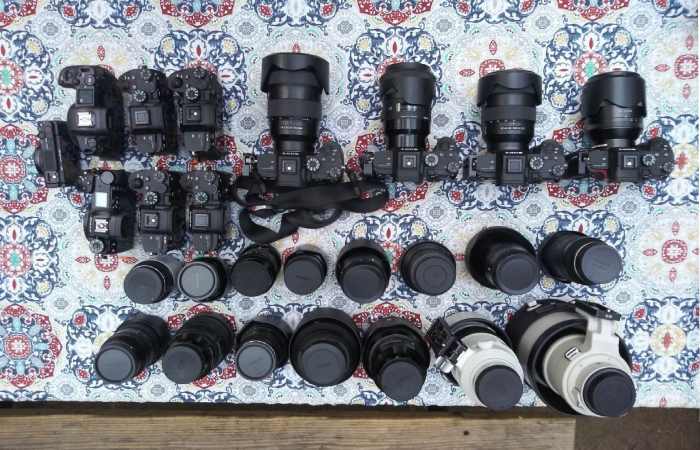
Telephoto lenses are divided into three major categories based on focal length.
| Category | Focal Length Range | Common Uses |
| Medium Telephoto | 70mm – 135mm | Portraits, weddings, events |
| Standard Telephoto | 135mm – 300mm | Wildlife, sports, outdoor photography |
| Super Telephoto | 300mm+ | Birds, aviation, distant wildlife |
Prime vs Zoom Telephoto
Telephoto lenses can also be:
- Prime lenses (fixed focal length like 85mm or 300mm)
- Zoom lenses (variable focal length like 70–200mm or 100–400mm)
Prime lenses often offer:
- Sharper images
- Wider apertures
- Lighter build
Zoom lenses offer:
- More flexibility
- Faster framing adjustments
- Greater versatility
Advantages and Disadvantages of Telephoto Lenses
Advantages
- Capture distant subjects without cropping
- Excellent for sports and wildlife
- Create professional-looking portraits
- Strong background separation
- Reduce distractions in the frame
Disadvantages
- Larger and heavier than standard lenses
- More expensive, especially super telephotos
- Harder to handhold at very long focal lengths
- More sensitive to camera shake
Real-World Uses of Telephoto Lenses
Wildlife Photography
Wild animals cannot be approached easily. Telephoto lenses allow you to:
- Shoot safely from a distance
- Capture fine details like fur and feathers
- Maintain natural animal behavior
Wildlife photographers often use 300mm, 400mm, 500mm, or even 600mm lenses.
Sports Photography
In stadiums and outdoor sports events, you are rarely close to the action. Telephoto lenses help you:
- Freeze action moments
- Isolate athletes
- Capture emotion and detail
A 70–200mm or 100–400mm lens is common in sports photography.
Portrait Photography
Medium telephoto lenses (85mm to 135mm) are considered ideal for portraits because:
- They avoid facial distortion
- They create pleasing compression
- They produce smooth background blur
Landscape Photography
Although wide-angle lenses are popular for landscapes, telephoto lenses can:
- Compress mountain layers
- Highlight distant details
- Create abstract compositions
Street Photography
Telephoto lenses allow photographers to:
- Capture candid moments
- Maintain distance
- Avoid disturbing subjects
Telephoto vs Zoom vs Prime Lenses
Many beginners confuse these terms. Here is a clear breakdown.
| Feature | Telephoto | Zoom | Prime |
| Refers To | Long focal length | Variable focal length | Fixed focal length |
| Flexibility | Depends | High | Low |
| Image Quality | Varies | Very good | Often excellent |
| Cost | Moderate to high | Moderate | Varies |
Important clarification:
A telephoto lens can be either a zoom or a prime. “Telephoto” describes focal length, not lens type.
How to Choose the Right Telephoto Lens
Here are the most important factors to consider.
1. Focal Length
Choose based on your subject:
- Portraits: 85mm–135mm
- Sports: 70–200mm or 100–400mm
- Wildlife: 300mm+
2. Aperture
A wider aperture (like f/2.8) allows:
- Better low-light performance
- More background blur
- Faster shutter speeds
However, lenses with wide apertures are more expensive.
3. Image Stabilization
At long focal lengths, camera shake becomes more noticeable. Optical image stabilization helps reduce blur.
4. Autofocus Speed
For wildlife and sports, fast autofocus is critical.
5. Weight and Size
Super telephoto lenses can weigh several kilograms and may require a tripod or monopod.
Telephoto Lens Price Comparison
Below is an approximate pricing overview across categories.
| Category | Typical Price Range | Ideal For |
| Entry-Level Telephoto Zoom | $300 – $800 | Beginners |
| Mid-Range Telephoto Zoom | $800 – $2,000 | Enthusiasts |
| Professional Super Telephoto | $2,000 – $15,000+ | Professionals |
Prices vary depending on:
- Brand
- Aperture size
- Build quality
- Stabilization technology
- Autofocus motor
Telephoto Lens Usage Distribution (Estimated Market Share)
Below is a rough representation of how telephoto lenses are commonly used:
| Photography Type | Approximate Usage Share |
| Wildlife | 35% |
| Sports | 25% |
| Portraits | 20% |
| Events | 10% |
| Landscape & Other | 10% |
If visualized as a pie chart:
- Wildlife occupies the largest portion.
- Sports follows closely.
- Portrait photography holds a significant share.
- Other categories form smaller segments.
Technical Comparison Table: Telephoto vs Wide Angle
| Feature | Telephoto Lens | Wide-Angle Lens |
| Focal Length | 70mm+ | 35mm and below |
| Field of View | Narrow | Wide |
| Subject Distance | Far | Close |
| Background | Compressed | Expanded |
| Distortion | Minimal in portraits | Can distort faces |
| Ideal For | Wildlife, sports, portraits | Landscapes, architecture |
Frequently Asked Questions
Is a telephoto lens the same as a zoom lens?
No. A telephoto lens refers to focal length. A zoom lens refers to the ability to change focal lengths. A telephoto lens can be either zoom or prime.
Do telephoto lenses work on smartphones?
Modern smartphones include small telephoto modules that provide optical zoom. However, they are much smaller and less powerful than DSLR or mirrorless telephoto lenses.
Are longer telephoto lenses always better?
Not necessarily. Longer lenses:
- Cost more
- Weigh more
- Require better stabilization
The best lens depends on your photography goals.
Can beginners use telephoto lenses?
Yes. Entry-level telephoto zoom lenses are affordable and easy to use. They are excellent for learning composition and subject isolation.
Final Thoughts
A telephoto lens is one of the most powerful tools in photography. It allows you to reach beyond physical limits and capture subjects that would otherwise be impossible to photograph clearly.
From wildlife and sports to portraits and landscapes, telephoto lenses offer:
- Greater subject isolation
- Strong visual compression
- Professional-looking background blur
- Enhanced creative control
If you are serious about improving your photography, understanding telephoto lenses is essential. Choosing the right focal length and aperture combination can dramatically elevate the quality of your images.