
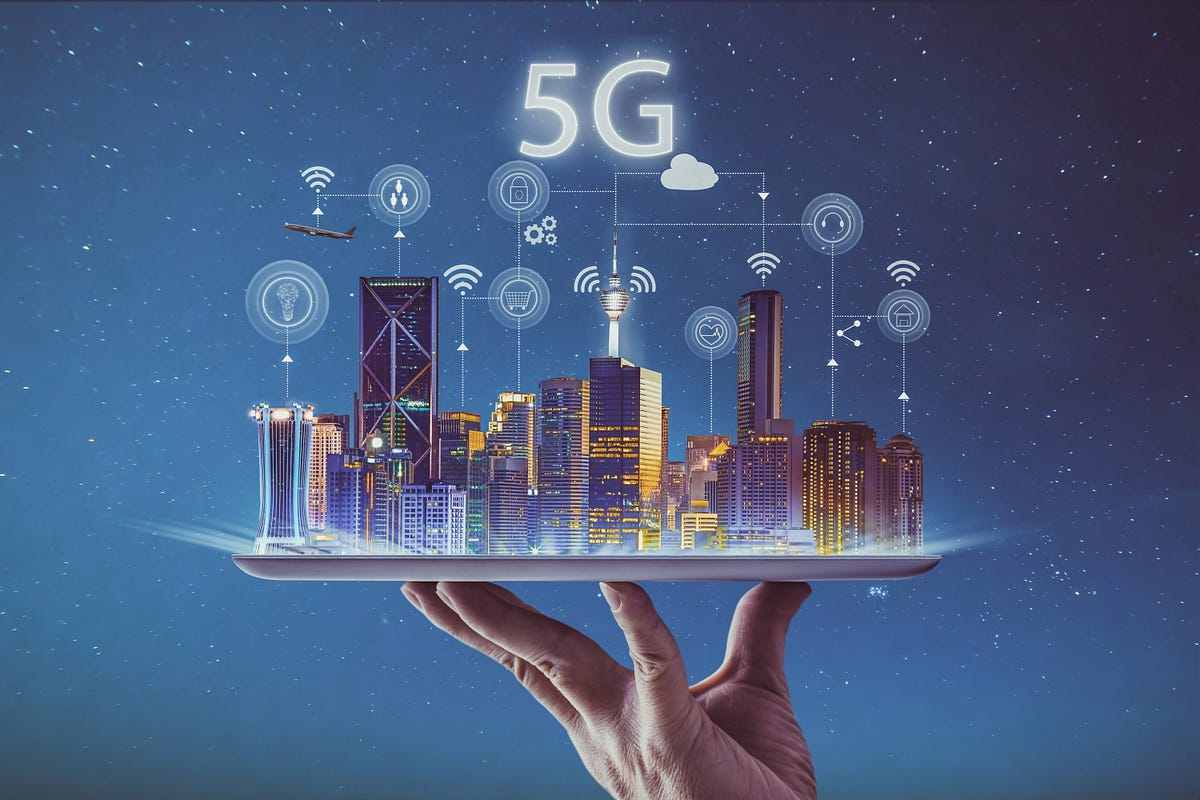
The evolution of mobile networks has always played a major role in shaping how people communicate, work, and interact with digital technologies. From the early days of 2G voice communication to the high-speed internet capabilities of 4G LTE, each generation of wireless technology has introduced transformative changes. Now, the arrival of 5G technology is expected to bring one of the biggest digital revolutions in modern history.
5G, or the fifth generation of wireless communication technology, promises faster internet speeds, ultra-low latency, improved network reliability, and the ability to connect billions of devices simultaneously. These capabilities will not only improve mobile internet but also reshape industries such as healthcare, transportation, manufacturing, and entertainment.
According to industry research, 5G could generate $13.2 trillion in global economic output by 2035 and create millions of new jobs worldwide. This shows that 5G is not just a telecommunications upgrade but a fundamental technology that will redefine digital experiences and global connectivity.
This article explores the impact of 5G on technology and communication, its benefits, real-world applications, industry adoption, and the future of connected technologies.
Table of Contents
What is 5G Technology?
5G is the latest generation of mobile network technology designed to deliver faster data speeds, improved connectivity, and lower latency compared to previous wireless standards.
Unlike earlier networks that mainly supported smartphones and internet browsing, 5G is built to power an entire ecosystem of connected devices such as smart homes, autonomous vehicles, IoT devices, and industrial automation systems.
Key Characteristics of 5G
- Ultra-fast internet speeds
- Extremely low latency (as low as 1 millisecond)
- Ability to support millions of devices simultaneously
- Increased network reliability
- Higher bandwidth and efficiency
Compared to earlier networks, 5G is capable of delivering up to 100 times faster speeds than 4G while enabling real-time communication between connected devices.
Evolution of Mobile Network Technology
Understanding the evolution of wireless communication helps illustrate how revolutionary 5G really is.
| Generation | Launch Period | Key Features | Speed |
| 2G | Early 1990s | Digital voice calls, SMS | ~64 Kbps |
| 3G | Early 2000s | Mobile internet, video calls | ~2 Mbps |
| 4G LTE | 2010s | HD streaming, mobile apps | ~100 Mbps |
| 5G | 2020s | IoT connectivity, smart cities, real-time communication | Up to 20 Gbps |
5G represents a significant leap because it is designed not just for mobile communication but for entire digital infrastructures, including industrial automation and connected cities.
Core Technologies Behind 5G
5G networks rely on several advanced technologies that enable high-speed communication and connectivity.
Enhanced Mobile Broadband (eMBB)
This technology enables extremely fast internet speeds for applications such as:
- 4K and 8K video streaming
- Virtual reality (VR)
- Augmented reality (AR)
- Cloud gaming
Ultra-Reliable Low Latency Communication (URLLC)
URLLC allows near real-time communication, which is essential for applications like:
- Autonomous vehicles
- Remote surgeries
- Industrial automation
- Robotics
Latency in 5G networks can be as low as 1 millisecond, making real-time digital interaction possible.
Massive Machine Type Communication (mMTC)
This technology allows millions of devices to connect simultaneously, enabling the large-scale deployment of IoT devices.
Examples include:
- Smart homes
- Connected factories
- Smart cities
- Agricultural sensors
Speed Comparison: 4G vs 5G
Below is a simple comparison showing how 5G improves connectivity compared to previous technologies.
| Feature | 4G LTE | 5G |
| Maximum Speed | 100 Mbps | 10–20 Gbps |
| Latency | 30–50 ms | 1–10 ms |
| Device Connectivity | ~100,000 devices/km² | ~1 million devices/km² |
| Reliability | High | Extremely High |
| Network Efficiency | Moderate | Very High |
This massive improvement in speed and latency is what enables real-time digital experiences.
5G Industry Adoption
Below is a simplified representation of industries expected to benefit the most from 5G technology.
| Industry | Estimated Adoption Share |
| Manufacturing | 25% |
| Smart Cities | 20% |
| Healthcare | 15% |
| Transportation | 15% |
| Media & Entertainment | 15% |
| Agriculture | 10% |
Manufacturing and smart city infrastructure are expected to lead adoption due to the need for connected sensors, automation, and data analytics.
The Impact of 5G on Communication
Communication technologies are evolving rapidly with the introduction of 5G networks. The improvements in speed and reliability enable more immersive and interactive communication experiences.
Faster Mobile Internet
One of the most noticeable benefits of 5G is faster mobile internet. Users can download movies, stream ultra-high-definition videos, and play cloud-based games without buffering.
5G networks can reach download speeds of up to 20 Gbps, making large downloads possible in seconds.
Improved Video Communication
Video conferencing and online meetings have become essential for businesses and remote workers. 5G enables:
- Higher-quality video calls
- Reduced lag
- Seamless remote collaboration
This will significantly improve the experience of platforms used for remote work and global communication.
Real-Time Collaboration
Businesses can use 5G to enable real-time collaboration tools, allowing teams across different countries to work together instantly using cloud applications and shared digital environments.
The Impact of 5G on Emerging Technologies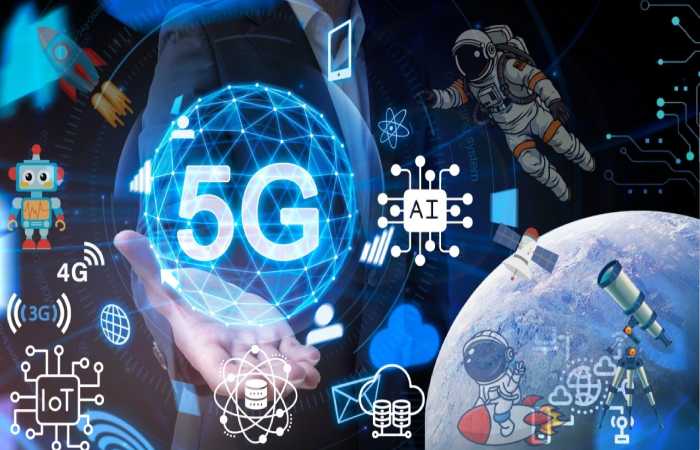
5G will accelerate the development of several advanced technologies.
Internet of Things (IoT)
The Internet of Things connects everyday devices to the internet so they can collect and exchange data.
Examples include:
- Smart home devices
- Wearable health trackers
- Connected vehicles
- Smart agriculture sensors
5G allows millions of devices to connect simultaneously, enabling large-scale IoT deployments.
IoT Growth Comparison
| Technology | Max Connected Devices |
| 4G Networks | 100,000 devices/km² |
| 5G Networks | 1,000,000 devices/km² |
This increase will enable smart ecosystems across cities and industries.
Artificial Intelligence (AI)
5G networks support the rapid transfer of data required by AI systems. This enables:
- Faster machine learning
- Real-time data processing
- Intelligent automation
AI-powered systems can analyze data instantly and make decisions in real time.
Cloud Computing
With ultra-fast connectivity, businesses can rely more heavily on cloud services.
Benefits include:
- Faster cloud data transfer
- Reduced latency for applications
- Real-time cloud gaming
- Remote software access
Edge computing also becomes more efficient because data can be processed closer to the user.
Industry Applications of 5G
The impact of 5G goes far beyond smartphones. It is expected to transform entire industries.
Healthcare
Healthcare is one of the industries that will benefit the most from 5G technology.
Applications include:
- Remote patient monitoring
- Telemedicine
- Robotic surgeries
- AI-powered diagnostics
Low latency enables doctors to perform remote surgeries using robotic systems with minimal delay.
Smart Cities
Smart cities rely on connected infrastructure to improve urban living.
5G enables:
- Smart traffic management
- Intelligent surveillance systems
- Efficient energy usage
- Automated waste management
Connected sensors can collect data from across a city and optimize services in real time.
Transportation
5G will play a key role in the development of connected and autonomous vehicles.
Benefits include:
- Real-time vehicle communication
- Smart traffic control systems
- Safer road infrastructure
- Autonomous driving technologies
Vehicles will communicate with each other and with road infrastructure to prevent accidents and improve traffic flow.
Manufacturing
Manufacturing is expected to be one of the biggest beneficiaries of 5G.
Smart factories use connected machines and sensors to monitor production processes.
Advantages include:
- Predictive maintenance
- Automated production lines
- Real-time equipment monitoring
- Reduced downtime
5G enables factories to operate more efficiently through industrial IoT systems.
Agriculture
5G also has the potential to revolutionize agriculture through precision farming.
Farmers can use connected sensors and drones to monitor:
- Soil conditions
- Crop health
- Weather patterns
- Irrigation systems
These technologies improve crop yields and reduce resource waste.
Price Comparison: 5G vs 4G Deployment Costs
Telecommunications companies must invest heavily in infrastructure to deploy 5G networks.
| Infrastructure Component | 4G Cost Estimate | 5G Cost Estimate |
| Network Towers | $100k – $200k | $200k – $350k |
| Spectrum Licensing | $1B+ | $5B+ (in large markets) |
| Small Cell Installation | Limited | Extensive |
| Fiber Backhaul | Moderate | High |
Although the initial investment is expensive, the long-term economic benefits are expected to be enormous.
Advantages of 5G Technology
The major advantages of 5G include:
Faster Data Speeds
Downloads and uploads are significantly faster than previous network generations.
Ultra-Low Latency
Latency as low as 1 ms enables real-time digital interactions.
Higher Network Capacity
Millions of devices can connect simultaneously without congestion.
Improved Reliability
Stable connections allow mission-critical applications such as healthcare and autonomous vehicles.
Enhanced Innovation
5G supports emerging technologies like AI, VR, and IoT.
Challenges of 5G Technology
Despite its benefits, 5G also faces several challenges.
Infrastructure Costs
Building new towers and installing fiber networks requires huge investments.
Limited Coverage
5G signals have shorter ranges than 4G, requiring more base stations.
Security Concerns
More connected devices increase the risk of cybersecurity threats.
Spectrum Availability
Governments must allocate wireless spectrum for telecom providers.
Future of 5G Technology
The expansion of 5G networks will continue throughout the decade. Experts predict that by 2030, more than half of all mobile connections will be powered by 5G networks globally.
Future developments may include:
- Fully autonomous transportation systems
- AI-driven smart cities
- Immersive virtual reality environments
- Advanced telemedicine
- Industrial automation at massive scale
As technology continues to evolve, the transition from 5G to 6G networks is already being researched, which could offer even faster speeds and more advanced connectivity.
Conclusion
The introduction of 5G technology marks a turning point in the evolution of communication and digital technology. With ultra-fast speeds, low latency, and massive device connectivity, 5G will enable innovations that were previously impossible.
From smart cities and autonomous vehicles to remote healthcare and industrial automation, the impact of 5G will extend across nearly every industry. Businesses will operate more efficiently, communication will become more immersive, and new digital experiences will emerge.
Although challenges such as infrastructure costs and security concerns remain, the long-term benefits of 5G are undeniable. As the global rollout continues, 5G will become the backbone of the next generation of digital transformation, shaping the future of technology and communication for decades to come.