

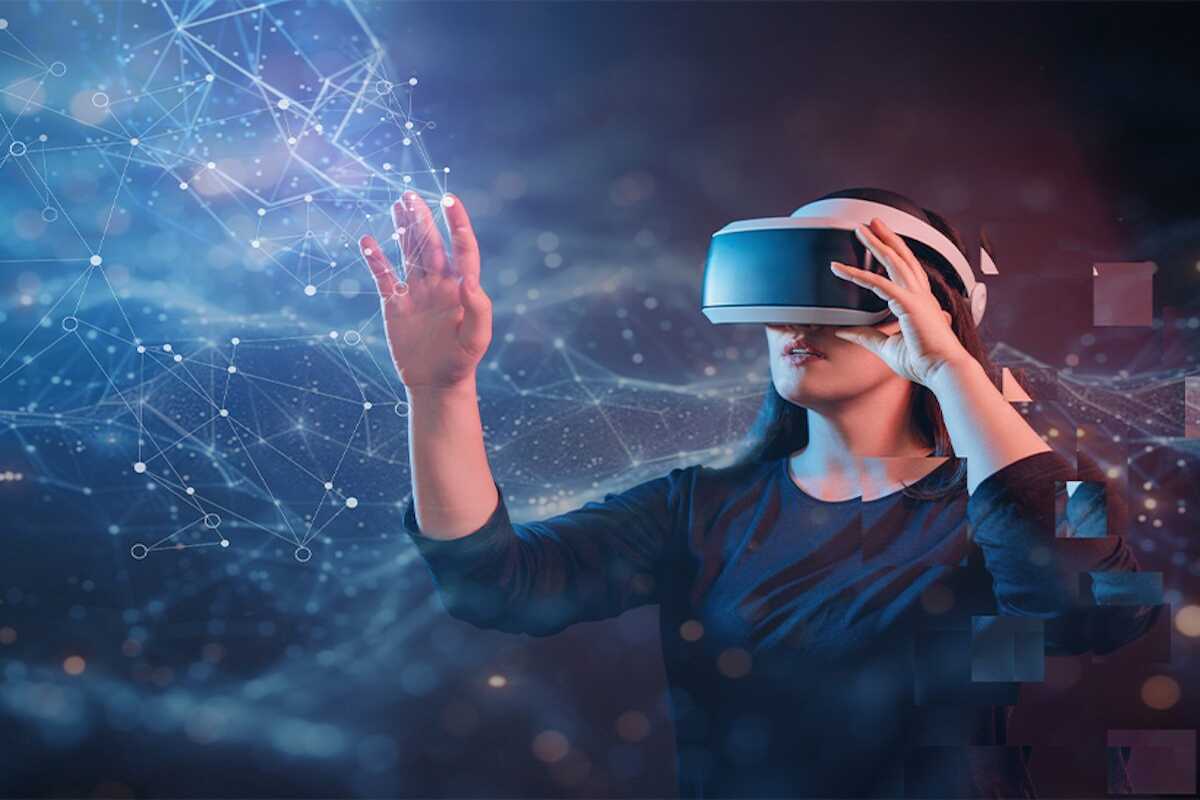
Virtual Reality (VR) has evolved from a niche technology used mainly in gaming to a transformative platform that is redefining digital experiences across industries. From immersive entertainment and virtual tourism to advanced medical training and remote collaboration, VR is reshaping how people interact with technology and digital environments.
Over the past decade, improvements in hardware, artificial intelligence, and high-speed internet have accelerated the adoption of immersive technologies. Organizations and consumers alike are embracing virtual environments that allow them to learn, work, socialize, and shop in entirely new ways. Today, VR is not just about wearing a headset—it is about creating immersive digital ecosystems that combine data, simulation, and real-time interaction.
Industry experts predict significant growth in this sector over the next decade. The global AR/VR market, valued at around $83 billion in 2025, is projected to reach over $2.1 trillion by 2035, with a CAGR of more than 38%.
This rapid growth highlights the increasing importance of immersive technologies in shaping the future of digital experiences.
Table of Contents
What Is Virtual Reality?
Virtual Reality is a computer-generated environment that allows users to interact with a simulated world using specialized devices such as headsets, sensors, and motion controllers.
Unlike traditional digital interfaces like smartphones or computer screens, VR creates a fully immersive experience where users feel as if they are physically present in a digital space.
Key Components of Virtual Reality
The VR ecosystem consists of several core technologies:
- VR Headsets – Devices that display immersive 3D environments.
- Motion Tracking Sensors – Track user movements and gestures.
- Controllers – Enable interaction with objects in virtual space.
- Spatial Audio Systems – Create realistic sound environments.
- Haptic Feedback Devices – Provide tactile sensations.
These components work together to produce realistic and interactive digital experiences.
Evolution of Virtual Reality Technology
Virtual reality has undergone significant transformation since its early conceptual stage.
Timeline of VR Development
| Era | Key Development | Impact |
| 1960s | First VR prototype (Sensorama) | Early concept of immersive media |
| 1990s | Gaming VR devices introduced | Limited adoption due to hardware limitations |
| 2010–2015 | Modern VR headsets launched | Consumer VR market begins |
| 2016–2020 | Rise of immersive gaming and training | Businesses adopt VR solutions |
| 2021–Present | Integration with AI and metaverse platforms | Expansion across industries |
Advancements in graphics processing, cloud computing, and 5G connectivity have dramatically improved VR performance and accessibility.
VR Market Growth and Industry Outlook
The VR industry has grown rapidly due to increased investment and technological innovation.
Global Virtual Reality Market Forecast
| Year | Market Size |
| 2023 | $27 Billion |
| 2025 | $83 Billion |
| 2030 | $450 Billion |
| 2035 | $2.1 Trillion |
According to industry research, demand for immersive experiences in gaming, training, and digital collaboration is fueling this growth.
VR Industry Adoption
Below is a simplified representation of VR adoption across industries.
| Industry | VR Adoption Share |
| Gaming & Entertainment | 35% |
| Healthcare | 15% |
| Education | 12% |
| Manufacturing | 10% |
| Retail & E-commerce | 10% |
| Real Estate | 8% |
| Tourism | 5% |
| Others | 5% |
Gaming remains the dominant sector, accounting for over 60% of the VR market share, while healthcare and education are rapidly growing segments.
Applications of Virtual Reality Across Industries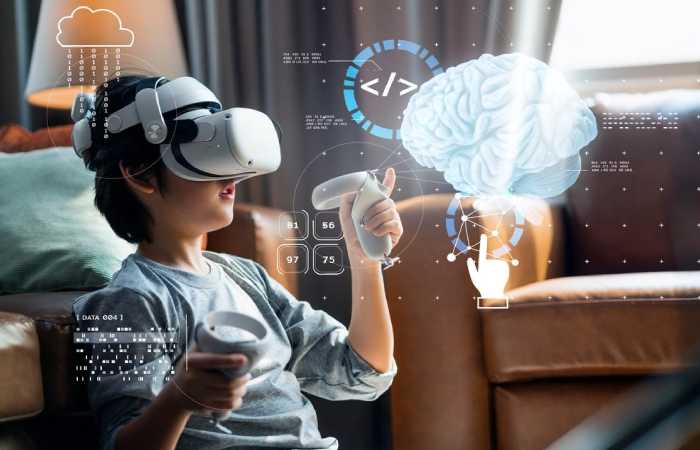
Virtual reality is transforming multiple industries by offering immersive solutions that improve efficiency, training, and customer engagement.
1. Gaming and Entertainment
Gaming is the most recognized application of VR technology.
VR gaming allows players to enter fully interactive digital worlds where they can explore environments, solve puzzles, and compete with other players in real time.
Benefits
- Realistic gaming environments
- Enhanced player immersion
- Interactive storytelling
- Multiplayer social experiences
Many entertainment companies are also building VR theme parks, interactive exhibitions, and immersive storytelling experiences.
2. Healthcare and Medical Training
The healthcare industry is increasingly using VR for training, treatment, and therapy.
Medical professionals can simulate surgeries, practice procedures, and train in realistic virtual environments without risking patient safety.
Healthcare VR Use Cases
- Surgical training simulations
- Pain management therapy
- Mental health treatment
- Rehabilitation programs
Studies show that 70% of hospitals now use VR for surgical planning and pain management, while VR therapy has helped reduce anxiety levels by about 30% in patients.
3. Education and Learning
Virtual reality is revolutionizing education by creating immersive learning environments.
Instead of reading about historical events or scientific concepts, students can experience them firsthand.
Examples
- Virtual science laboratories
- Historical simulations
- Medical training modules
- Engineering design environments
Research suggests that VR training can reduce learning time by 30–50% while improving knowledge retention by up to 30%.
4. Retail and E-Commerce
Retail businesses are using VR to create interactive shopping experiences.
Customers can explore virtual stores, try on products digitally, and visualize items before purchasing them.
VR Retail Applications
- Virtual clothing try-ons
- 3D product visualization
- Immersive brand experiences
- Virtual showrooms
About 40% of retail brands now use VR for virtual try-ons, which can increase purchase conversions by approximately 25%.
5. Real Estate and Architecture
VR is changing the way real estate professionals present properties to buyers.
Key Benefits
- Virtual property tours
- 3D architectural visualization
- Faster decision-making
- Global property access
Virtual tours have been shown to increase property visit rates by 40% and improve sales completion rates by 30%.
VR Device Price Comparison
The cost of VR hardware varies depending on performance, features, and ecosystem compatibility.
| VR Device Type | Average Price | Features |
| Entry-Level VR Headset | $200 – $400 | Basic gaming and media viewing |
| Mid-Range Standalone VR | $400 – $700 | Wireless, motion tracking |
| High-End VR Headset | $800 – $1500 | Advanced graphics and controllers |
| Enterprise VR Systems | $1500 – $5000 | Professional training and simulations |
High hardware costs remain one of the main barriers to widespread adoption, with about 42% of users citing expensive devices as a limitation.
Technologies Driving the Future of VR
Several emerging technologies are accelerating the development of immersive digital experiences.
Artificial Intelligence
AI enhances VR by enabling intelligent interactions with virtual characters and environments.
Examples include:
- AI-powered avatars
- Real-time environment generation
- Personalized virtual experiences
Researchers have found that integrating AI models into VR environments significantly improves realism and user engagement.
5G Connectivity
High-speed networks are essential for streaming complex VR environments.
Benefits of 5G in VR include:
- Lower latency
- Faster rendering
- Cloud-based VR platforms
Haptic Feedback Technology
Haptic devices simulate touch sensations within virtual environments.
Applications include:
- Medical training
- Virtual product testing
- Gaming interactions
Spatial Computing
Spatial computing merges physical and digital environments to create interactive mixed-reality experiences.
This technology is expected to play a key role in the development of metaverse platforms and digital workspaces.
The Rise of the Metaverse
The concept of the metaverse represents a shared virtual world where people can interact, work, and socialize through digital avatars.
These environments combine technologies such as:
- Virtual Reality
- Augmented Reality
- Artificial Intelligence
- Blockchain
- Internet of Things
The metaverse has the potential to create entirely new digital economies and social ecosystems.
Benefits of Virtual Reality
Virtual reality offers numerous advantages for both businesses and consumers.
Major Benefits
- Immersive digital experiences
- Enhanced learning and training
- Improved remote collaboration
- Cost-effective simulations
- Increased customer engagement
Organizations using VR for training have reported better employee performance and improved skill retention.
Challenges and Limitations
Despite its rapid growth, VR technology still faces several challenges.
Key Challenges
- High hardware costs
- Motion sickness and discomfort
- Limited content availability
- Hardware bulkiness
- Privacy concerns
Around 35% of users report motion sickness issues, which can limit prolonged use of VR systems.
The Future of Digital Experiences
The next decade will likely bring significant changes to how people interact with digital environments.
Future Trends
- AI-Generated Virtual Worlds
- Fully Immersive Metaverse Platforms
- Cloud-based VR streaming
- Hyper-realistic avatars
- Virtual workplaces
- Immersive online education
- Virtual tourism experiences
These developments will reshape industries ranging from entertainment to enterprise collaboration.
VR Use Cases in the Next 10 Years
| Industry | Future VR Application |
| Education | Fully immersive virtual classrooms |
| Healthcare | Remote surgery training simulations |
| Retail | Virtual malls and immersive shopping |
| Tourism | Virtual travel experiences |
| Manufacturing | VR-based equipment training |
| Corporate | Virtual offices and remote collaboration |
Why Virtual Reality Matters for the Digital Economy
Virtual reality is becoming a core component of the digital economy because it enables deeper engagement and new business models.
Companies can now create:
- Virtual products
- Immersive marketing campaigns
- Digital real estate
- Interactive brand experiences
As digital environments become more realistic and accessible, VR will play an increasingly important role in shaping online interactions.
Conclusion
Virtual reality is no longer a futuristic concept—it is a rapidly growing technology that is transforming how people experience the digital world. From gaming and healthcare to education and e-commerce, VR is opening new possibilities for immersive digital interaction.
The combination of AI, spatial computing, 5G connectivity, and advanced hardware will continue to push the boundaries of what virtual experiences can achieve. As costs decrease and technology improves, VR will become more accessible to businesses and consumers worldwide.
In the coming years, the line between the physical and digital worlds will continue to blur. Virtual reality will not only redefine entertainment but also revolutionize the way we learn, work, communicate, and explore the digital universe.
The future of digital experiences is immersive and virtual reality is leading the way.