
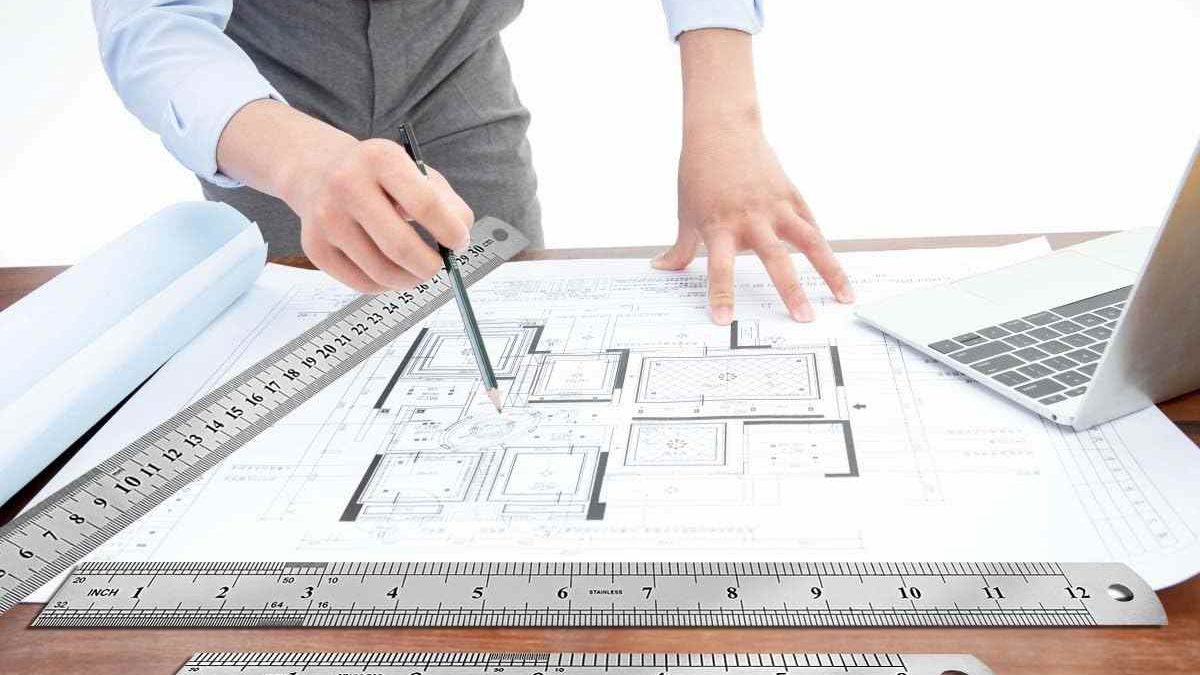

Understanding how to read a ruler is a fundamental skill that supports accuracy in academic work, technical drawing, DIY projects, and everyday measurements. While rulers may appear simple, beginners often struggle with interpreting the various markings especially when dealing with fractions on inch rulers or precise millimeter readings on metric scales.
This in-depth guide provides a structured, research-driven explanation of ruler reading. It is designed to align with high-ranking content in this niche while maintaining clarity, practical usability, and SEO value.
Table of Contents
What is a Ruler?
A ruler is a linear measuring instrument used to measure length or distance. Standard rulers typically measure up to 12 inches or 30 centimeters and are marked with evenly spaced divisions that represent units of measurement.
Rulers are essential tools across multiple domains:
- Education (mathematics, geometry)
- Engineering and architecture
- Carpentry and construction
- Fashion design and tailoring
- Arts and crafts
Modern rulers often combine both metric (centimeters and millimeters) and imperial (inches and fractions) systems, allowing users to switch between measurement standards easily.
Types of Rulers Explained
Selecting the correct type of ruler is critical for achieving accurate measurements. Rulers can be categorized based on measurement systems and usage.
Based on Measurement System
| Type | Units Used | Common Usage |
| Imperial Ruler | Inches, fractions | USA, legacy systems |
| Metric Ruler | cm, mm | Global standard |
| Dual Ruler | Both | Most widely used |
Dual rulers are the most practical for beginners because they allow learning both systems simultaneously.
Based on Material and Use Case
| Type | Material | Best For |
| Plastic Ruler | Lightweight plastic | Students |
| Wooden Ruler | Wood | Classroom use |
| Steel Ruler | Stainless steel | Precision tasks |
| Flexible Tape | Fiber/plastic | Tailoring |
| Engineer Scale | Specialized plastic/metal | Technical drawings |
Each type has a specific application, with steel rulers offering the highest durability and precision.
Understanding Ruler Markings
Ruler markings are designed to represent subdivisions of measurement units. Understanding these markings is the first step toward accurate reading.
Key Concepts
- Longer lines indicate major units (inches or centimeters)
- Medium lines indicate intermediate divisions
- Shortest lines represent the smallest measurable units
Inch Ruler Structure
- 1 inch is divided into 16 equal parts
- Each division represents a fraction:
- 1/2
- 1/4
- 1/8
- 1/16
Metric Ruler Structure
- 1 centimeter = 10 millimeters
- Each millimeter is clearly marked with equal spacing
How to Read an Inch Ruler
Reading an inch ruler requires understanding fractions and visual differentiation between line lengths.
Step-by-Step Process
- Locate the last whole inch before the object’s endpoint
- Count the number of smaller divisions after that inch
- Convert the count into a fraction
- Add the fraction to the whole number
Example
If an object ends slightly past 6 inches and aligns with the fourth small mark:
- Each small mark = 1/16
- Fourth mark = 4/16 = 1/4
Final measurement = 6 1/4 inches
Inch Fraction Reference Table
| Division | Fraction | Decimal Equivalent |
| Half | 1/2 | 0.5 |
| Quarter | 1/4 | 0.25 |
| Eighth | 1/8 | 0.125 |
| Sixteenth | 1/16 | 0.0625 |
Understanding this table eliminates confusion when interpreting ruler markings.
How to Read a Metric Ruler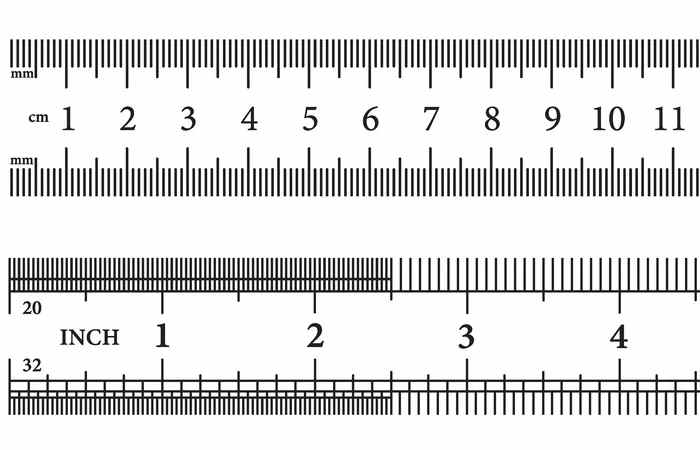
Metric rulers are simpler because they operate on a base-10 system.
Step-by-Step Process
- Identify the last whole centimeter
- Count the millimeter markings beyond it
- Combine both values
Example
If an object measures 8 cm and extends 7 millimeters further:
Final measurement = 8.7 cm
CM to MM Conversion Table
| Centimeters | Millimeters |
| 1 cm | 10 mm |
| 2 cm | 20 mm |
| 5 cm | 50 mm |
| 10 cm | 100 mm |
| 15 cm | 150 mm |
This conversion is essential for precision tasks in science and engineering.
Step-by-Step Measurement Guide
Accurate measurement is not just about reading markings; it also involves correct positioning and observation.
Proper Technique
- Place the object at the zero mark, not the ruler edge
- Ensure the ruler is aligned straight
- Keep your eye directly above the measurement point
Measurement Checklist
- Confirm unit system before measuring
- Avoid parallax error (viewing angle distortion)
- Double-check fractional readings
- Use consistent units throughout
Common Beginner Mistakes
Beginners often encounter predictable errors when learning to read a ruler.
Starting from the Wrong Point
Some rulers have a gap before zero. Always start at the zero mark.
Mixing Measurement Systems
Switching between inches and centimeters unintentionally leads to incorrect readings.
Ignoring Smaller Divisions
Precision depends on recognizing smaller markings such as 1/16 inch or 1 mm.
Misinterpreting Fractions
Fractions like 1/8 and 1/16 can be easily confused without practice.
Practical Examples
Applying theory to real-world scenarios improves understanding.
Example in Inches
An object ends at 3 inches and the eighth small division:
- Each division = 1/16
- 8/16 = 1/2
Final measurement = 3.5 inches
Example in Metric
An object measures 12 cm and extends 3 mm further:
Final measurement = 12.3 cm
Price Comparison of Rulers (India Market)
Understanding price variations helps buyers choose the right ruler for their needs.
Price Table
| Type | Material | Price Range (₹) | Durability | Accuracy |
| Plastic | PVC | ₹10 – ₹50 | Low | Moderate |
| Wooden | Hardwood | ₹20 – ₹80 | Medium | Moderate |
| Steel | Stainless steel | ₹100 – ₹300 | High | High |
| Engineer Scale | Plastic/Metal | ₹150 – ₹500 | High | Very High |
Key Insights
- Plastic rulers dominate due to affordability
- Steel rulers are preferred for professional tasks
- Engineering scales offer specialized measurement ratios
Pro Tips for Accuracy
Improving measurement accuracy requires both technique and tool selection.
Practical Tips
- Use steel rulers for long-term precision
- Avoid worn or faded markings
- Measure twice before cutting or marking
- Prefer metric units for calculations
- Maintain proper lighting for clear visibility
Advanced Tip
Professionals often rely on metric measurements because decimal-based systems reduce computational errors compared to fractions.
Applications of Ruler Reading
Ruler reading is not limited to academic settings. It plays a crucial role in various industries.
Education
Students use rulers in geometry, diagrams, and measurements.
Engineering
Precise measurements are critical for design and manufacturing.
Carpentry
Wood cutting and furniture design depend on accurate ruler readings.
Tailoring
Fabric measurement requires flexibility and precision.
Art and Design
Artists use rulers for proportion and alignment.
Frequently Asked Questions
Is it easier to use a metric ruler than an inch ruler?
Yes, metric rulers are generally easier because they use a decimal system instead of fractions.
What is the smallest measurement on a ruler?
- Inch ruler: typically 1/16 inch
- Metric ruler: 1 millimeter
Why are some ruler lines longer than others?
Line length indicates importance:
- Long lines = main units
- Short lines = subdivisions
Can I measure without starting at zero?
Yes, but you must subtract the starting point from the ending measurement.
Final Thoughts
Learning how to read a ruler is a foundational skill that directly impacts accuracy in both simple and complex tasks. While inch rulers require familiarity with fractions, metric rulers offer a more intuitive approach through decimal-based measurements.
The key to mastering ruler reading lies in consistent practice, careful observation, and understanding how different markings represent subdivisions.