
How Smart Cities Will Change Urban Living
Cities around the world are experiencing rapid transformation due to population growth, technological advancement, and the increasing demand for sustainable living. By 2050, more than two-thirds of the global population is expected to live in urban areas, making efficient urban management more important than ever. Smart cities represent the next stage in urban development, where technology, data, and connected infrastructure work together to improve the quality of life for citizens.
A smart city uses technologies such as the Internet of Things (IoT), artificial intelligence (AI), big data analytics, and 5G networks to manage urban infrastructure more efficiently. These technologies enable cities to monitor traffic, reduce energy consumption, improve public safety, and optimize public services. Smart city solutions have the potential to reduce crime, improve healthcare services, enhance environmental sustainability, and make daily life more convenient for residents.
In this comprehensive guide, we will explore how smart cities are transforming urban living, the technologies behind them, their economic impact, and the challenges cities face when implementing them.
Table of Contents
What Is a Smart City?
A smart city is an urban environment that uses digital technologies and connected devices to improve city operations and services. These technologies collect data from sensors, devices, and infrastructure to help governments make informed decisions and automate processes.
Smart city systems typically include:
- IoT sensors and devices
- Artificial intelligence analytics
- Cloud computing infrastructure
- Smart transportation networks
- Smart energy grids
- Digital citizen services
Globally, smart city technologies are growing rapidly. The smart city technology market was valued at over $301 billion in 2026 and is expected to reach nearly $687 billion by 2035, growing at a strong annual rate.
This rapid expansion reflects how governments and private organizations are investing heavily in smart infrastructure to make cities more efficient and sustainable.
Why Smart Cities Are Becoming Essential
Urban populations are expanding rapidly, creating challenges such as traffic congestion, pollution, energy shortages, and infrastructure strain.
Smart cities aim to solve these problems by using technology to optimize urban systems.
Key Reasons Smart Cities Are Growing
- Rapid urbanization worldwide
- Rising environmental concerns
- Demand for better public services
- Traffic congestion and mobility issues
- Need for efficient energy management
More than 150 million IoT devices are already deployed in smart city projects worldwide, monitoring traffic, air quality, energy usage, and public infrastructure.
Core Technologies Powering Smart Cities
Several advanced technologies form the backbone of smart cities.
1. Internet of Things (IoT)
IoT devices connect infrastructure such as traffic lights, public transport, waste bins, and water systems to the internet.
These devices collect real-time data that allows cities to:
- Monitor traffic congestion
- Detect pollution levels
- Track energy usage
- Improve waste management
Large cities often deploy 1,000–2,000 sensors per square kilometer to effectively monitor infrastructure and environmental conditions.
2. Artificial Intelligence and Data Analytics
AI processes the massive amounts of data collected by smart city sensors. It helps cities make predictions and automate decisions.
Examples include:
- AI traffic management systems
- Predictive infrastructure maintenance
- Emergency response optimization
- Energy demand forecasting
AI-driven traffic systems can analyze vehicle flow and adjust signals in real time to reduce congestion and emissions.
3. 5G and Advanced Connectivity
High-speed networks such as 5G allow billions of devices to connect simultaneously with minimal delay.
Benefits of 5G for smart cities:
- Faster communication between devices
- Support for autonomous vehicles
- Real-time data transmission
- Improved public safety monitoring
Many smart city deployments now rely on 5G connectivity to support large IoT networks.
4. Cloud and Edge Computing
Smart cities generate enormous volumes of data. Cloud computing stores and processes this data while edge computing processes data closer to devices.
This allows:
- Faster decision making
- Reduced network congestion
- Improved system reliability
Smart City Market Share by Sector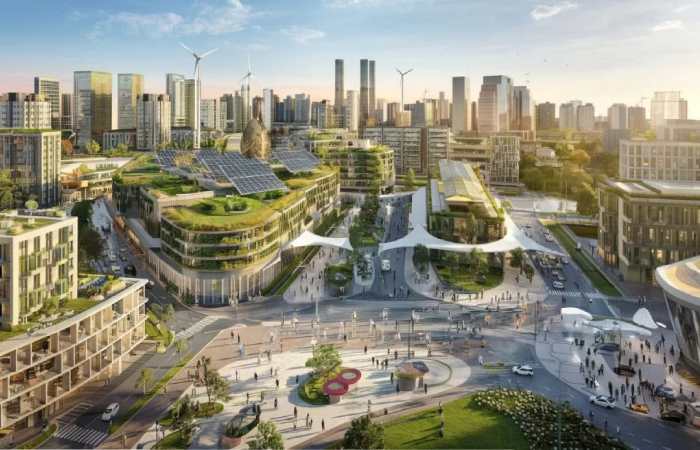
Different sectors contribute to the development of smart cities. Transportation, infrastructure, and energy systems dominate smart city investments.
Smart City Market Distribution
| Sector | Market Share |
| Smart Infrastructure | 31% |
| Mobility & Transportation | 24% |
| Public Safety | 19% |
| Energy & Utilities | 16% |
| Citizen Services | 10% |
Smart infrastructure holds the largest share of smart city investments, particularly through smart lighting, connected buildings, and monitoring systems.
Pie Chart Representation of Smart City Technologies
Below is a simplified representation of how smart city investments are distributed across sectors.
Smart City Technology Adoption (Pie Chart Representation)
Smart Infrastructure – 31%
Mobility & Transportation – 24%
Public Safety – 19%
Energy & Utilities – 16%
Citizen Services – 10%
This distribution shows that infrastructure and transportation systems form the backbone of most smart city projects.
How Smart Cities Improve Daily Urban Life
Smart cities aim to make everyday life easier, safer, and more sustainable.
Let’s explore some of the key improvements.
1. Smart Transportation Systems
Traffic congestion is one of the biggest problems in modern cities.
Smart transportation uses sensors, cameras, and AI systems to manage traffic efficiently.
Features of Smart Transportation
- Adaptive traffic lights
- Real-time traffic monitoring
- Smart parking systems
- Autonomous public transport
- Connected vehicle networks
Smart transportation projects represent roughly 33% of the smart city IoT market, highlighting their importance in urban planning.
Benefits
- Reduced commute times
- Lower fuel consumption
- Improved road safety
- Less air pollution
2. Smart Energy Management
Energy consumption is another major challenge in growing cities.
Smart cities use intelligent grids and energy monitoring systems to reduce waste and improve sustainability.
Energy smart Solutions
- Smart electricity meters
- Renewable energy integration
- Automated street lighting
- AI-based energy optimization
Smart grids can automatically adjust power distribution based on demand, reducing energy waste and operational costs.
3. Smart Buildings and Infrastructure
Modern buildings are becoming smarter with connected systems that manage lighting, heating, cooling, and security.
Smart Building Technologies
- Automated HVAC systems
- Smart lighting
- Occupancy sensors
- Energy monitoring dashboards
Smart buildings can significantly reduce energy usage while improving comfort for residents.
4. Intelligent Waste Management
Waste management is often inefficient in traditional cities.
Smart waste systems use sensors in garbage bins to monitor fill levels and optimize collection routes.
Advantages
- Reduced fuel consumption
- Lower operational costs
- Cleaner urban environments
- Improved recycling efficiency
5. Smart Public Safety Systems
Public safety is one of the most important aspects of smart cities.
Smart technologies help law enforcement respond quickly and prevent crime.
Smart Safety Tools
- AI-powered surveillance cameras
- Emergency response systems
- Disaster monitoring sensors
- Smart street lighting
Research shows that smart city applications can reduce crime incidents by 30–40% in some urban environments.
Cost Comparison of Smart City Technologies
Smart city implementation requires significant investment. However, these technologies often reduce operational costs in the long term.
Smart Infrastructure Cost Comparison
| Technology | Average Installation Cost |
| Smart Street Lights | $200 – $800 per unit |
| Traffic Monitoring Sensors | $500 – $1500 per unit |
| Smart Energy Meters | $100 – $300 per unit |
| Environmental Monitoring Sensors | $150 – $600 per unit |
| Smart Parking Systems | $3000 – $10000 per installation |
Additional cybersecurity upgrades for connected infrastructure can increase costs by $8–$12 per smart lighting unit, reflecting growing security requirements.
Environmental Benefits of Smart Cities
Smart cities focus heavily on sustainability.
Technology enables cities to reduce pollution, improve air quality, and manage natural resources efficiently.
Environmental Improvements
- Reduced carbon emissions
- Improved waste recycling
- Better water management
- Increased use of renewable energy
IoT and smart energy systems can reduce urban energy consumption by up to 30% in some implementations, saving billions in operational costs.
Economic Benefits of Smart Cities
Smart cities also drive economic growth.
By improving infrastructure and services, they attract businesses, investors, and skilled professionals.
Economic Advantages
- Job creation in technology sectors
- Growth of digital services
- Increased productivity
- Higher property values
Cities with advanced digital infrastructure often become innovation hubs for startups and global companies.
Examples of Smart Cities Around the World
Several cities are already leading the smart city revolution.
Global Smart City Leaders
Singapore
- Smart traffic systems
- Digital government services
- AI urban planning
Barcelona
- Smart parking solutions
- Energy-efficient infrastructure
- Open data platforms
Dubai
- Autonomous transportation initiatives
- Smart policing systems
- Digital city governance
These cities demonstrate how technology can transform urban living.
Challenges Facing Smart City Development
Despite the benefits, smart cities face several challenges.
Major Challenges
- High implementation costs
- Cybersecurity risks
- Data privacy concerns
- Integration with old infrastructure
- Lack of technical expertise
Around 32% of cities delay smart city projects due to high implementation costs, highlighting financial challenges.
Future Trends in Smart Cities
Smart city development will accelerate over the next decade as technologies continue to evolve.
Emerging Trends
- AI-powered city management systems
- Autonomous public transportation
- Smart environmental monitoring
- Digital citizen engagement platforms
- Integrated renewable energy grids
The smart energy sector alone is expected to grow at more than 12% annually, driven by sustainability initiatives and climate goals.
The Role of Citizens in Smart Cities
Smart cities are not only about technology; they also rely on citizen participation.
Digital platforms allow residents to:
- Report city issues
- Access public services
- Participate in community decisions
- Track local environmental conditions
Citizen engagement ensures that smart city technologies truly improve quality of life.
The Future of Urban Living
The concept of smart cities represents a major shift in how urban environments operate. By integrating digital technologies into infrastructure and public services, cities can become more efficient, sustainable, and livable.
Smart transportation systems will reduce congestion, energy management systems will cut emissions, and digital governance platforms will improve citizen services.
Although challenges such as cost and data privacy remain, the long-term benefits of smart cities are substantial. With continued technological innovation and strategic urban planning, smart cities will redefine urban living for future generations..