
Understanding how to read a ruler in inches is a foundational skill used in academics, construction, design, tailoring, and everyday measurements. While it may seem simple at first glance, many people struggle with interpreting fractional markings accurately.
This guide is designed as a comprehensive, SEO-optimized resource to help readers master inch-based ruler reading—from basics to advanced usage while maintaining a natural, high-quality editorial flow suitable for diggblog.com.
Table of Contents
What Is a Ruler and How Inches Work
A ruler is a measuring tool typically 12 inches long (1 foot) with evenly spaced markings. Each inch is divided into smaller units for precision.
Most rulers feature:
- Inches on one side (imperial system)
- Centimeters/millimeters on the other (metric system)
Key Concept:
- 1 inch = 2.54 cm
- Each inch is divided into fractions like:
- 1/2
- 1/4
- 1/8
- 1/16
Anatomy of an Inch Ruler
To read a ruler correctly, you must understand its structure.
Main Components
| Component | Description |
| Inch Marks | Longest lines, numbered (1, 2, 3…) |
| Half Inch | Second longest lines |
| Quarter Inch | Medium lines |
| Eighth Inch | Smaller lines |
| Sixteenth Inch | Smallest lines |
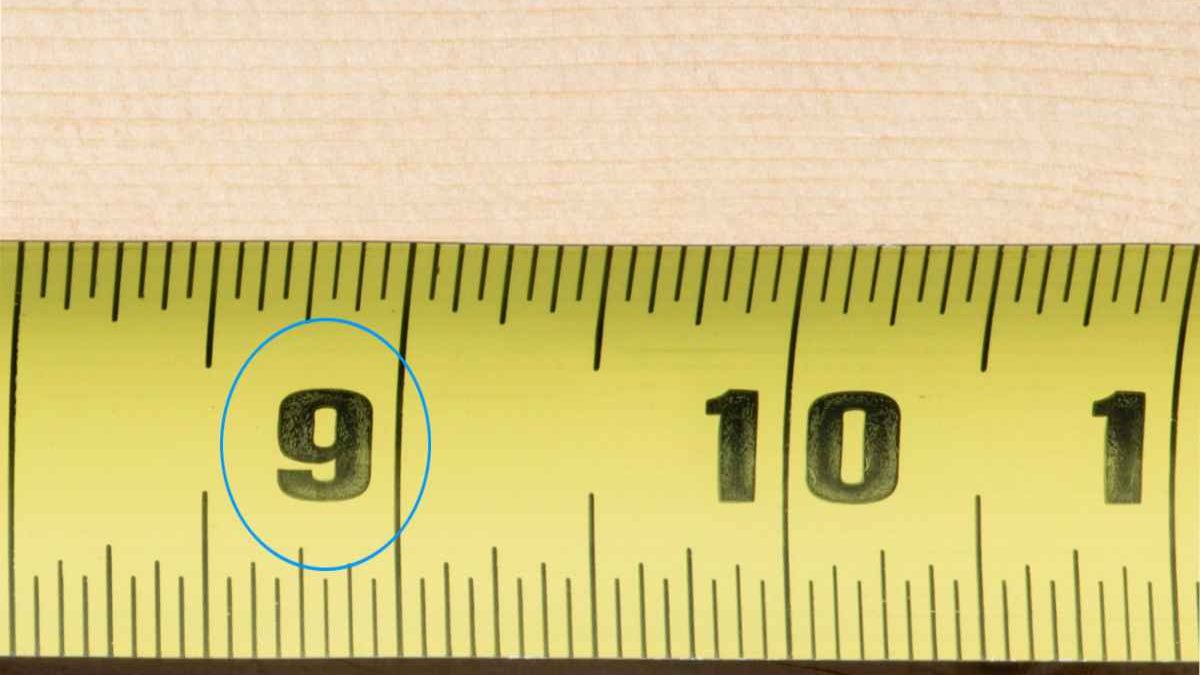
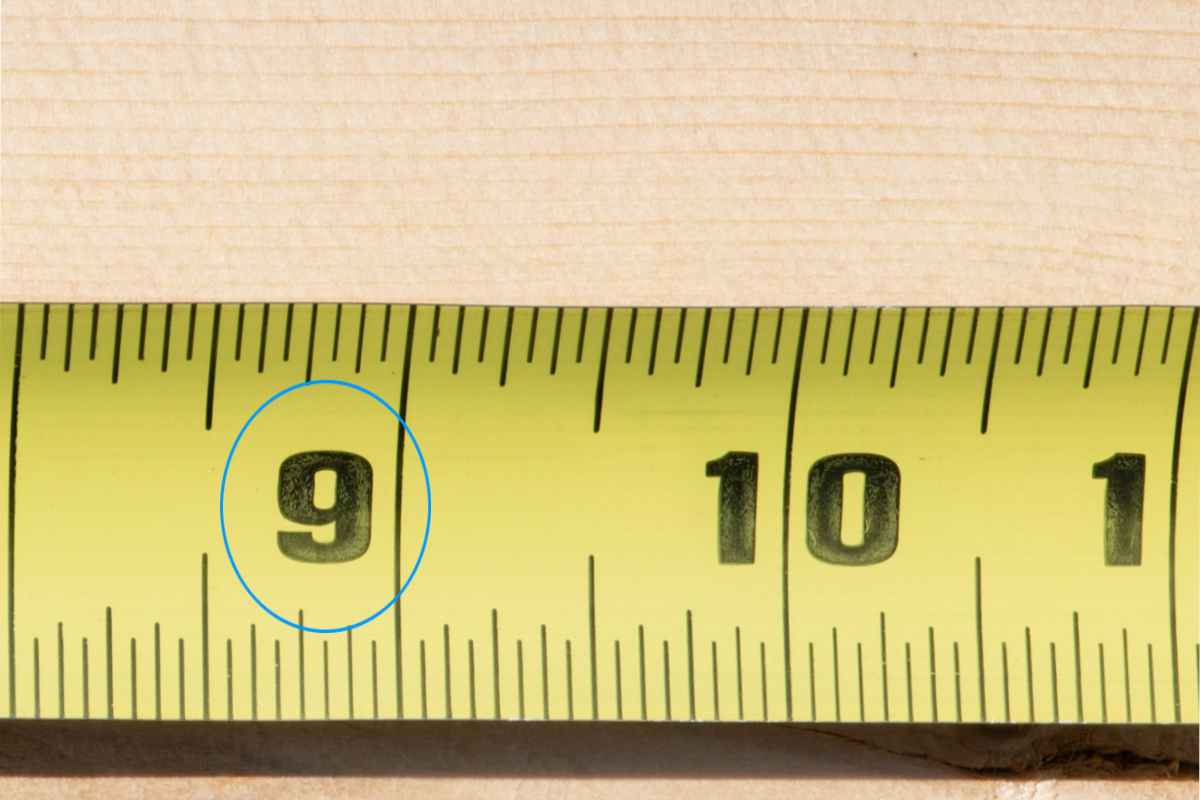
Each inch is typically divided into 16 equal parts, meaning the smallest visible unit is 1/16 inch.
Visual Breakdown of Inch Divisions (Pie Representation)
Think of an inch like a pie divided into slices:
- Whole pie = 1 inch
- Half pie = 1/2 inch
- Quarter slices = 1/4 inch
- Smaller slices = 1/8 and 1/16
Fraction Distribution Table
| Fraction | Decimal | Number of Divisions |
| 1/1 | 1.0 | 1 |
| 1/2 | 0.5 | 2 |
| 1/4 | 0.25 | 4 |
| 1/8 | 0.125 | 8 |
| 1/16 | 0.0625 | 16 |
Step-by-Step: How to Read a Ruler in Inches
1: Identify Whole Inches
Look at the longest numbered lines.
Example:
- If an object ends between 3 and 4 → base measurement = 3 inches
2: Count Fractional Marks
Find the exact line where the object ends.
Example:
- 4 small lines after 3 = 4/16 = 1/4
- Final measurement = 3 1/4 inches
3: Simplify Fractions
Convert fractions:
- 8/16 = 1/2
- 4/16 = 1/4
4: Combine Values
Final reading = Whole number + fraction
Example Measurements Explained
| Position on Ruler | Measurement |
| Exactly on 5 | 5 inches |
| Between 6 and 7 at half mark | 6 1/2 inches |
| 3rd small line after 2 | 2 3/16 inches |
| 8th line after 4 | 4 1/2 inches |
Types of Inch Rulers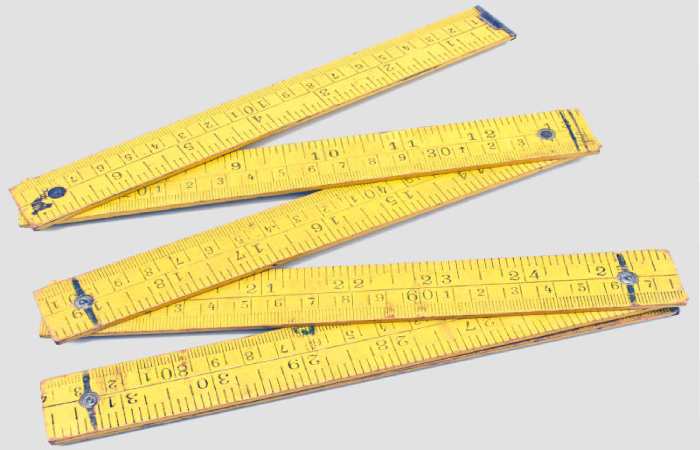
1. Fractional Rulers (Most Common)
- Use fractions like 1/2, 1/4, 1/8
- Standard for schools and DIY work
2. Decimal Rulers
- Use decimals like 0.1, 0.01
- Used in engineering and machining
Comparison Table
| Feature | Fractional Ruler | Decimal Ruler |
| Format | Fractions | Decimals |
| Ease of Use | Moderate | Easier for calculations |
| Usage | General use | Technical fields |
| Precision | Up to 1/16 or 1/32 | Up to 0.01 |
Understanding Line Length Hierarchy
The longer the line, the larger the fraction.
| Line Size | Meaning |
| Longest | 1 inch |
| Second longest | 1/2 inch |
| Medium | 1/4 inch |
| Smaller | 1/8 inch |
| Smallest | 1/16 inch |
This visual hierarchy allows quick identification without counting every line.
Common Mistakes When Reading a Ruler
Avoid these frequent errors:
- Starting from the wrong point (not zero)
- Miscounting fractional lines
- Confusing metric and inch sides
- Ignoring fraction simplification
- Viewing at an angle (parallax error)
Pro Tip:
Always align the object with the zero mark, not the edge of the ruler.
Practical Applications of Reading Inches
Everyday Uses
- Measuring furniture
- Cutting materials
- School assignments
- Tailoring clothes
Professional Uses
- Construction
- Engineering drafting
- Interior design
- Carpentry
Accuracy Tips for Better Measurement
- Keep ruler flat
- Align eyes directly above markings
- Use good lighting
- Double-check readings
- Use finer divisions for precision
Conversion: Inches to Decimal and Metric
Fraction to Decimal
| Fraction | Decimal |
| 1/2 | 0.5 |
| 1/4 | 0.25 |
| 1/8 | 0.125 |
| 1/16 | 0.0625 |
Inches to Centimeters
| Inches | Centimeters |
| 1 | 2.54 |
| 5 | 12.7 |
| 10 | 25.4 |
Advanced Concept: Reading Smaller Divisions
Some rulers go beyond 1/16:
- 1/32 inch
- 1/64 inch
These are used in:
- Precision engineering
- Machining
- Scientific measurements
Price Comparison of Rulers (India Market Insight)
| Type | Material | Price Range (₹) |
| Plastic ruler | Basic | ₹10 – ₹50 |
| Steel ruler | Durable | ₹50 – ₹200 |
| Engineer scale | Professional | ₹150 – ₹500 |
| Digital ruler | Advanced | ₹500 – ₹2000 |
Insights:
- Plastic rulers are cheapest but less durable
- Steel rulers offer better longevity
- Digital rulers provide high precision
When to Use Inches vs Metric
| Scenario | Recommended System |
| School basics | Inches |
| Science work | Metric |
| Construction (US) | Inches |
| Global standards | Metric |
Quick Practice Exercise
Try reading these:
- Line between 2 and 3 at 1/2 → 2.5 inches
- 5th small line after 1 → 1 5/16 inches
- Quarter mark after 7 → 7 1/4 inches
Summary
Reading a ruler in inches involves:
- Identifying whole numbers
- Understanding fractional divisions
- Recognizing line lengths
- Practicing accurate alignment
Once mastered, it becomes an intuitive and essential life skill.
Final Thoughts
While metric measurements dominate globally, inch-based rulers remain highly relevant, especially in construction, design, and certain educational systems. With consistent practice, even complex fractional readings like 7 13/16 inches become easy to interpret.