
Barometric pressure is a fundamental concept in meteorology, atmospheric science, and weather forecasting. Every weather report you see whether on television, a website, or a smartphone relies on atmospheric pressure readings to predict changes in weather conditions.
Barometric pressure helps scientists understand storms, track climate patterns, determine aircraft altitude, and analyze environmental changes. Although it may sound technical, the concept is relatively simple once explained clearly.
In this comprehensive guide, you will learn what barometric pressure is, how it works, how it is measured, why it changes, and why it is essential for weather forecasting and modern technology.
Table of Contents
What Is Barometric Pressure?
Barometric pressure, also known as atmospheric pressure, is the force exerted by the weight of the air in Earth’s atmosphere on a surface.
Even though air is invisible and feels light, it has mass. The atmosphere consists of layers of gases surrounding Earth, and gravity pulls these gases toward the planet’s surface. The weight of this massive column of air presses down on everything below it.
At sea level, the average atmospheric pressure is approximately:
- 1013.25 hectopascals (hPa)
- 1013.25 millibars (mb)
- 29.92 inches of mercury (inHg)
- 1 atmosphere (atm)
These values represent standard atmospheric pressure under normal conditions.
Key Characteristics of Barometric Pressure
| Feature | Explanation |
| Scientific name | Atmospheric pressure |
| Measurement instrument | Barometer |
| Average pressure at sea level | 1013.25 hPa |
| Other units | atm, mb, inHg, Pa |
| Major uses | Weather forecasting, aviation, meteorology |
Understanding these characteristics helps explain how atmospheric pressure influences weather patterns around the world.
Why Barometric Pressure Exists
The reason barometric pressure exists is due to gravity and the presence of gases in the atmosphere.
The atmosphere is made primarily of:
- Nitrogen (about 78%)
- Oxygen (about 21%)
- Argon
- Carbon dioxide
- Water vapor
- Trace gases
Each molecule of these gases has mass. Gravity pulls them toward Earth, causing billions of molecules to stack on top of one another.
This stacking effect creates pressure.
Imagine standing at sea level. Above you is an enormous column of air that stretches nearly 100 kilometers into the sky. All of that air weighs something, and its weight creates atmospheric pressure.
How Barometric Pressure Works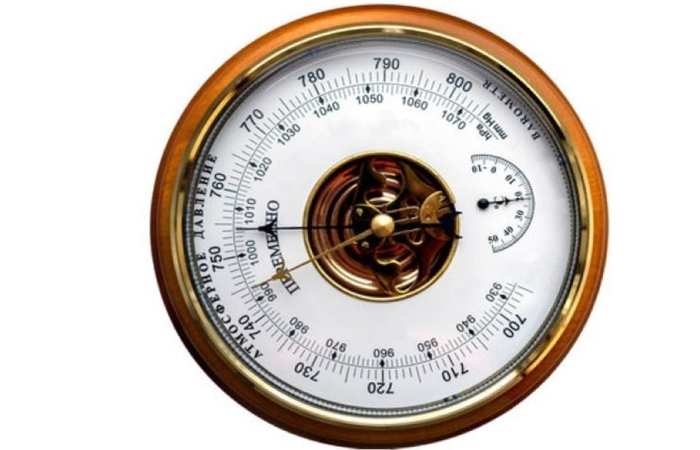
Barometric pressure depends mainly on air density.
When air molecules are tightly packed together, pressure increases. When they spread apart, pressure decreases.
Several environmental factors influence air density:
- Temperature
- Altitude
- Humidity
- Weather systems
Pressure Behavior Based on Conditions
| Condition | Air Density | Pressure |
| Cold air | Dense | Higher pressure |
| Warm air | Less dense | Lower pressure |
| Rising air | Expanding | Low pressure |
| Sinking air | Compressing | High pressure |
These relationships are the basis of modern weather forecasting.
Standard Atmospheric Pressure
Scientists use a standardized value for atmospheric pressure measured at sea level under normal conditions.
| Unit | Standard Value |
| Atmosphere | 1 atm |
| Millibar | 1013.25 mb |
| Hectopascal | 1013.25 hPa |
| Inches of mercury | 29.92 inHg |
| Pascal | 101,325 Pa |
Although these numbers appear different, they all represent the same amount of pressure expressed in different units.
Meteorologists typically use millibars or hectopascals, while aviation often uses inches of mercury.
Units Used to Measure Barometric Pressure
Different industries use different pressure units depending on the measurement system.
Common Pressure Units
| Unit | Typical Use |
| Pascal (Pa) | Scientific measurements |
| Kilopascal (kPa) | Engineering applications |
| Hectopascal (hPa) | Meteorology |
| Millibar (mb) | Weather reports |
| Inches of mercury (inHg) | Aviation |
| Pounds per square inch (psi) | Industrial systems |
Most global weather services now use hectopascals, which are equivalent to millibars.
How Barometric Pressure Is Measured
Barometric pressure is measured using a device known as a barometer.
A barometer calculates atmospheric pressure by measuring the force exerted by the air.
There are several types of barometers used in scientific research, weather stations, and consumer devices.
Types of Barometers
Mercury Barometer
The mercury barometer was invented in 1643 by physicist Evangelista Torricelli.
It works using a glass tube filled with mercury that is inverted into a mercury reservoir. Atmospheric pressure pushes the mercury upward into the tube. The height of the mercury column represents the pressure.
The formula used to calculate pressure in a mercury barometer is:
P = ρgh
Where:
- P = pressure
- ρ = density of mercury
- g = gravitational acceleration
- h = height of mercury column
Mercury barometers are extremely accurate but are less common today because mercury is toxic.
Aneroid Barometer
An aneroid barometer does not use liquid. Instead, it contains a small sealed metal chamber that expands or contracts depending on atmospheric pressure.
Mechanical components connected to this chamber move a needle on a dial to indicate pressure levels.
Aneroid barometers are widely used in:
- Home weather stations
- Aircraft altimeters
- Portable weather devices
Digital Barometers
Modern barometric sensors use electronic technology to detect pressure changes.
These sensors are used in:
- Smartphones
- Smartwatches
- Weather satellites
- GPS devices
- Aircraft navigation systems
Digital sensors provide precise pressure readings and are widely used in modern meteorology.
Barometric Pressure and Weather Forecasting
Barometric pressure plays a crucial role in predicting weather conditions.
Meteorologists monitor pressure changes to determine whether the weather will remain stable or shift toward storms, rain, or clear skies.
Pressure Changes and Weather
| Pressure Trend | Expected Weather |
| Rising pressure | Clear and stable conditions |
| Falling pressure | Increasing cloud cover |
| Rapid pressure drop | Storms or severe weather |
| Stable pressure | Little change in weather |
Pressure readings are one of the most reliable indicators of upcoming weather changes.
High Pressure vs Low Pressure Systems
Weather patterns are strongly influenced by pressure systems.
High Pressure Systems
High pressure systems form when air sinks toward Earth’s surface.
Characteristics include:
- Clear skies
- Dry air
- Light winds
- Stable weather
These systems often produce calm and sunny conditions.
Low Pressure Systems
Low pressure systems occur when warm air rises into the atmosphere.
Characteristics include:
- Cloud formation
- Rain or snow
- Storm development
- Strong winds
Low pressure systems are responsible for most storms and precipitation events.
Factors That Affect Barometric Pressure
Barometric pressure does not remain constant. Several factors influence its value.
Major Influencing Factors
- Altitude
- Temperature
- Humidity
- Weather systems
- Seasonal variations
Understanding these factors helps meteorologists interpret pressure readings more accurately.
Barometric Pressure and Altitude
One of the most important factors affecting pressure is altitude.
As altitude increases, the amount of air above decreases. With fewer air molecules pressing downward, atmospheric pressure drops.
Pressure Variation With Altitude
| Altitude | Average Pressure |
| Sea level | 1013 hPa |
| 1,000 meters | 898 hPa |
| 3,000 meters | 701 hPa |
| 5,000 meters | 540 hPa |
| 8,000 meters | 356 hPa |
This is why mountain climbers experience thinner air at higher elevations.
Barometric Pressure in Aviation
Aircraft rely heavily on atmospheric pressure measurements.
Pilots use instruments called altimeters, which calculate altitude based on air pressure.
Because pressure decreases with altitude, these instruments can determine how high an aircraft is flying above sea level.
Air traffic control systems regularly update pressure readings to ensure accurate altitude measurements.
Barometric Pressure in Everyday Life
Barometric pressure affects many aspects of daily life.
Common Applications
- Weather forecasting
- Aviation navigation
- Smartphone altitude detection
- Mountain climbing
- Scuba diving
- Environmental research
Modern smartphones often contain barometric sensors that improve GPS accuracy and help track elevation changes.
Effects of Barometric Pressure on Human Health
Some people are sensitive to changes in atmospheric pressure.
Rapid pressure fluctuations may cause symptoms such as:
- Headaches
- Migraines
- Joint pain
- Sinus discomfort
- Ear pressure
These symptoms are most commonly reported before storms when pressure drops quickly.
History of Barometric Pressure Discovery
The scientific measurement of atmospheric pressure began in the 17th century.
In 1643, Italian physicist Evangelista Torricelli conducted experiments using mercury-filled tubes. His work demonstrated that air has weight and can exert pressure.
This discovery led to the invention of the first barometer and laid the foundation for modern meteorology.
Comparison of Pressure Measurement Instruments
| Instrument | Accuracy | Typical Cost Range | Common Use |
| Mercury barometer | Very high | $200 – $1000 | Scientific research |
| Aneroid barometer | Moderate | $20 – $150 | Home weather monitoring |
| Digital pressure sensor | High | $5 – $50 | Electronics and devices |
| Barograph | High | $200 – $500 | Continuous pressure recording |
Digital sensors have become the most common due to their accuracy and integration into electronic systems.
Pressure Levels in Weather Systems
Different weather events are associated with different pressure levels.
| Weather Event | Typical Pressure Range |
| Clear weather | 1015–1030 hPa |
| Normal conditions | 1005–1015 hPa |
| Rain systems | 980–1005 hPa |
| Hurricanes | Below 980 hPa |
The lower the pressure within a storm system, the more intense the storm is likely to be.
Frequently Asked Questions
Is barometric pressure the same as atmospheric pressure?
Yes. Both terms refer to the pressure exerted by Earth’s atmosphere.
What is considered normal barometric pressure?
Normal barometric pressure at sea level is approximately 1013.25 millibars or 29.92 inches of mercury.
Why does barometric pressure fall before storms?
Storm systems involve rising warm air that creates areas of low pressure. As these systems approach, barometric pressure drops.
Does barometric pressure affect the human body?
Some individuals experience headaches, sinus pressure, or joint pain when atmospheric pressure changes rapidly.
Conclusion
Barometric pressure is a critical measurement that helps scientists understand the behavior of Earth’s atmosphere. It represents the weight of the air pressing down on the planet’s surface and plays a central role in weather forecasting, aviation navigation, and environmental science.
From predicting storms to determining altitude, barometric pressure remains one of the most important tools used by meteorologists and researchers. As technology continues to advance, digital pressure sensors are becoming more common, making atmospheric measurements more accurate and accessible than ever before.
A clear understanding of barometric pressure not only helps explain weather changes but also highlights the powerful influence of the atmosphere on everyday life.